By Emma Hutchison and Roland Bleiker
26 October 2026
Context of this Blog
This blog summarises an article published in International Theory, 18(2), 2026: pp. 332-64.
It was Emma’s last solo project. She gave it her everything, often working out of hospitals and under exceptionally difficult circumstances. In the end she ran out of time and life. Roland then spent the next 18 months doing his best to complete the project as Emma had envisaged it.
The Emotional Politics of Rituals
Rituals are a powerful and pervasive part of social and political life. The subject of scrutiny across humanities and the social sciences for several decades, rituals have meanwhile also become a major topic of discussion in international relations scholarship.
It is well recognised that rituals safeguard and sure-up existing forms of order. Rituals structure political life at all levels, from state-managed practices of commemorations and diplomatic ceremonies to the daily practices that individuals and communities perform, such as singing the national anthem at a sporting competition. The rituals that communities and polities live by and through provide symbolic and performative structures that assure, cohere, and orientate them and, in doing so, reinforce authority and order.
The purpose of our article – and the brief blog summary here – is to engage the issues at stake in three particular ways.
First: we show how rituals also possess the potential to bring about political change. They can unsettle and disrupt as much as they can placate and situate us. To think so appears counterintuitive at first, for it is natural to think of rituals as being associated with tradition, with time-honoured processes and patterns. We show how the very power of rituals to enact and entrench political orders also provides disenfranchised individuals and groups with opportunities to challenge existing power relations.
Second: emotions are central to how rituals either affirm and entrench or, conversely, transgress and transform political orders. Emotions embody the meanings and senses associated with ritual practices. They create ways of feeling and knowing and doing that attach individuals and collectives by providing a powerful sensory proclivity towards the respective ritual and the power relations at stake. In this way, emotions are bound up in the larger governing structures and institutions that rituals support, maintain, and legitimise.
Third: we and argue that discomfort is particularly important for understanding how ritual and political change takes place. Being unsettled can shift collective feelings which, in turn, can uproot political habits and structures. Individuals and groups can feel differently and, in doing so, stimulate discontent and contravene emotional norms. New beliefs and values emerge and can then disrupt established rituals. It is in this way that emotions and their more intangible affective energies generate political change. Such change can go in all political directions - towards democratic inclusion or towards populist authoritarianism, for instance. In either case, the related affective agency is important for understanding how rituals – and the political orders they can manage and sustain – are enacted and can shift over time.
Ritual, Power, and Order in International Relations
The rhythms and routines of ritual practices provide individuals with essential purpose and meaning, and thus comfort and stability. Seemingly trivial rituals - such as attending a weekly religious service, marking a wedding anniversary, celebrating a child’s graduation, or making a traditional Thanksgiving pumpkin pie – ground and enable individuals to situate themselves within a social, collective context. Perhaps the simplest way that rituals do this is by providing an indication of the most cherished values and beliefs that we – as individuals and as members of a community – aspire to and live by.
The prevailing approach to rituals – shaped by Emile Durkheim’s work – emphasises their unifying function. By enacting socially symbolic meanings, individuals participate as part of a wider collective that honours not only the respective ritual but also the worldviews it enacts.
Given the well-recognised unifying function of rituals it is not a large leap to hypothesise that ritual practices also animate, cohere, and abet order in politics. The repetition of symbolic acts is central to cementing this ordering process. Rituals perform the symbolic gestures that distinguish and define a community and its polity.
A national flag raising ceremony offers a particular apt illustration. When raising a country’s flag, citizens typically stand to attention and, depending on the circumstances, may also sing the national anthem in unison. If performed by soldiers in uniform, they would salute the flag. To an alien outsider, a flag would likely be seen simply as a piece of colourful fabric. Yet, we all know that a flag is a unifying symbol of shared citizenship and belonging. Standing rigid to watch in respect is the bodily ritual enactment of such belonging and implicitly demands loyalty.
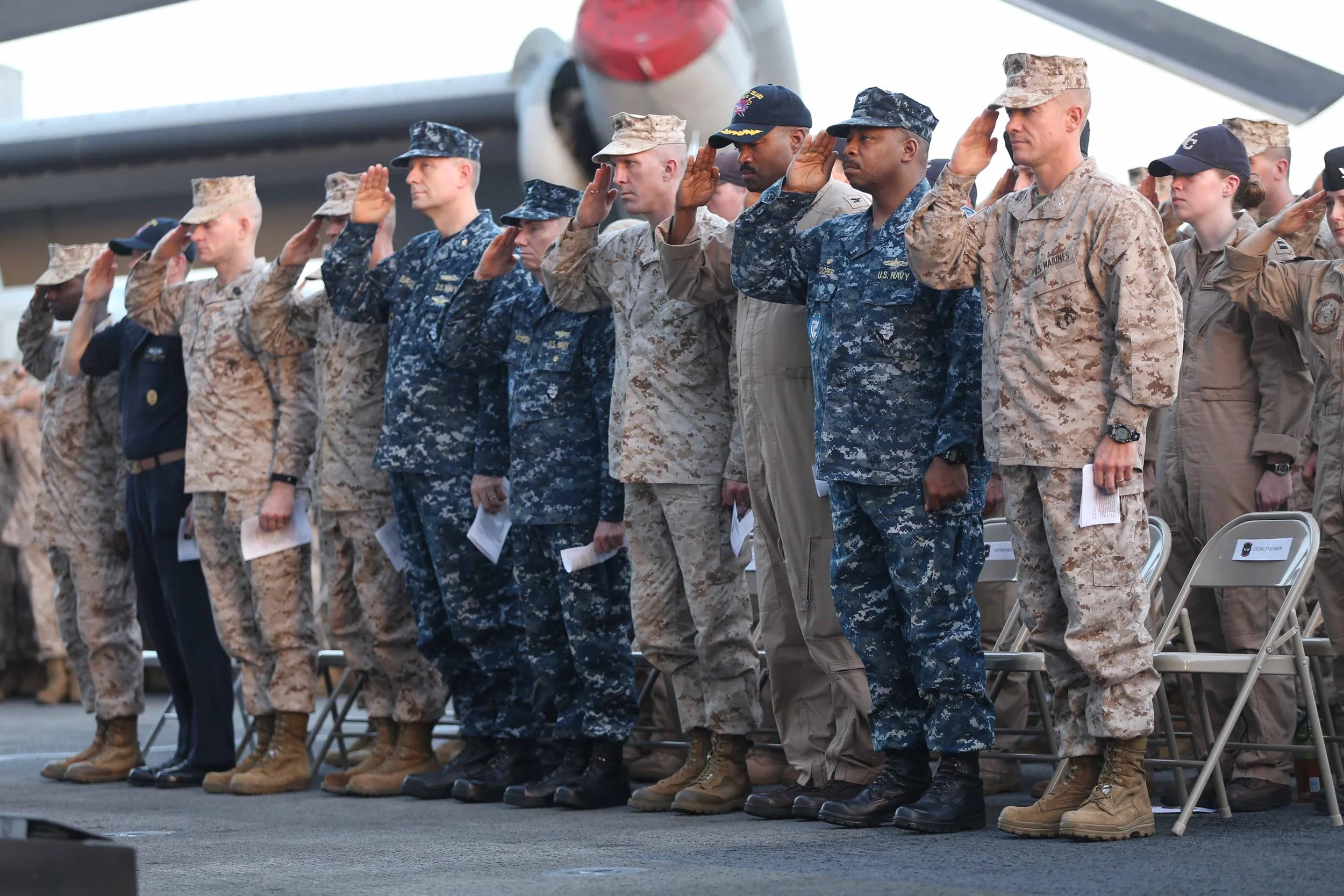
US Marines and sailors saluting during the singing of the National Anthem as part of a memorial ceremony on the flight deck of the USS Makin Island on 8 Oct 2024. Reproduced under Creative Common Attribution via via Wikimedia Commons.
In this way, rituals are intrinsically linked to power and authority. Implicitly commanding normative adherence and respect, rituals are deeply implicated in the contest for, and production of, social dominance and political power.
The struggle over rituals then becomes a struggle for power – a struggle over what rituals prevail, how they are practiced and how they confer or exercise authority. Established rituals – and especially the rituals that endure for long – can therefore be perceived as an indicator of the prevailing social and political dynamics and order at stake: who or what has power and with what effects.
Emotion and Ritual: Sustaining Orders Through Collective Feelings
Emotions – and their more ephemeral affective dimensions – are an important part of the social processes through which rituals politically unify. The special and symbolic character of rituals can generate collective feelings in ways that are hard to achieve through non-ritual practices. Rituals elevate normal habits out of their mundane setting and provide them with an emotional intensity that becomes infectious and connects people across differences that would otherwise set them apart.
Major global sporting events illustrate this unique relationship between emotions, rituals, and order. When crowds rhythmically chant for their team in a large arena they may be cheering with varying degrees of allegiance and enthusiasm. The communal singing fosters a ‘feeling of oneness,’ a sense of unity despite the many differences of the people involved.
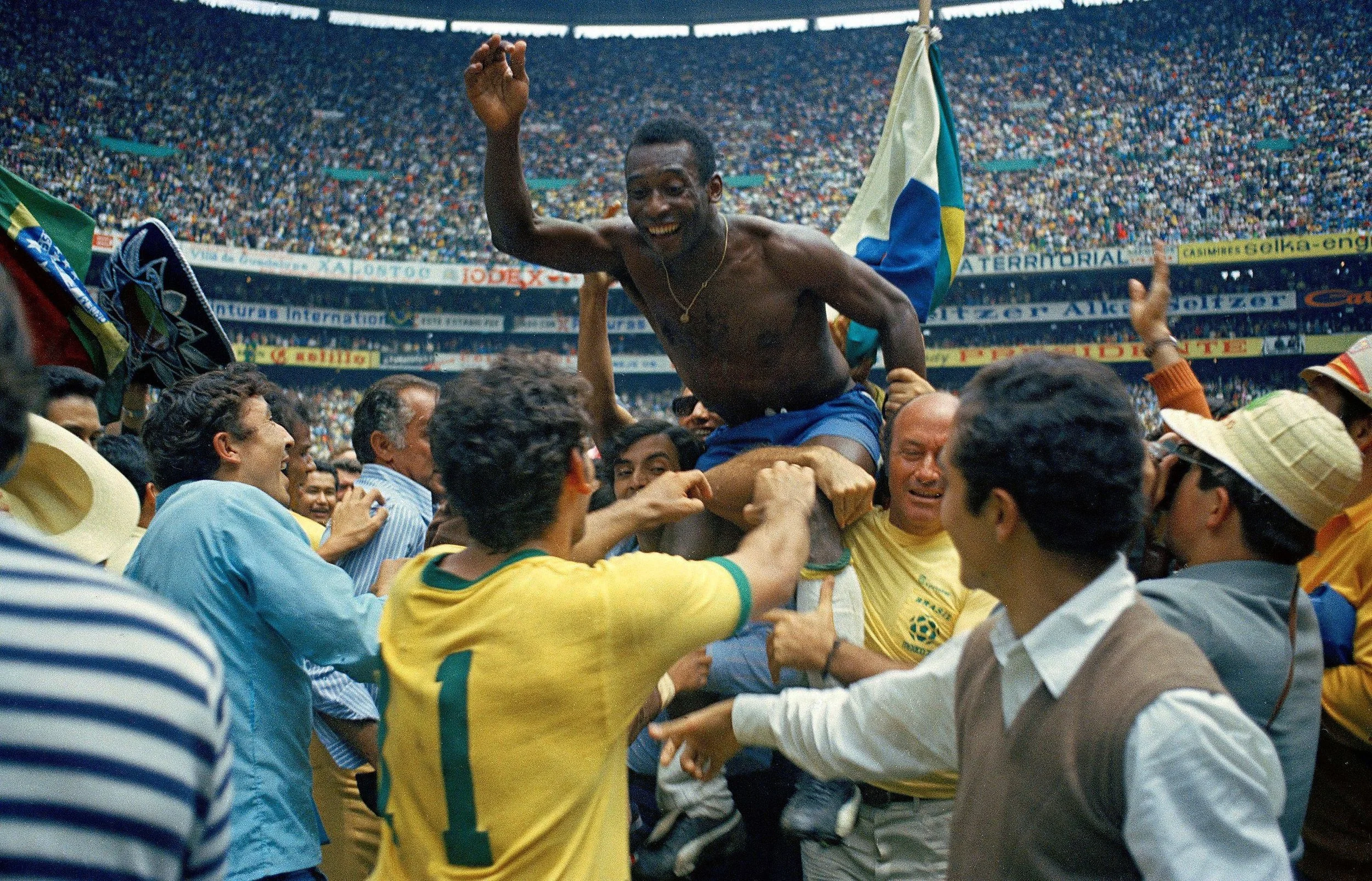
Football player Pele celebrated by fans and teammates after leading Brazil to the World Cup championship over Italy on 21 June 1970 in Mexico City. The image is in the public domain, via Wikimedia Commons.
There is something inherently emotional – as well as powerful and unifying – about bodies in groups. When our bodies do things, they physically act out the values, beliefs, and social connections that surround us. Abstract and contingent meanings are crystalised through the micro-rhythms and senses of the body. Our bodies respond, triggering feelings that interweave with more cognitive perceptions and prompt us to make sense of the world in particular ways.
Emotion, in this sense, reinforce the unifying function of rituals. They attach and detach us. They do so in relation to constellations of authority and power and order. Conventionally, this relationship has been understood through a positive lens because the affective power of rituals can generate social cohesion and certainty amidst the ambiguous and contingent nature of human life. In this way rituals subdue insecurity and replace it with the habit and comfort of a prevailing way of doing things – a prevailing political order.
Ritual Resistance and Political Change
While rituals reinforce political orders, they can also shift and unsettle us. They can disrupt orders.
To think of rituals and change is somewhat counterintuitive. Rituals are all about order and continuity, abouthabits that rhythmically enacting the existing social and political world. This is why they have traditionally been very effective in maintaining order and resisting change.
In reality, though, rituals are always in flux. Because rituals are practices that we enact and do, often in routine and unreflective ways, there are always immanent possibilities of performing rituals differently. We may rehearse a particular ritual protocol, yet there is always the possibility of performing the ritual differently. Consequently, there is always the possibility of perceiving differently; of doing things – rituals – in ways other than how power dynamics typically discipline us to do so.
We go a step further and suggest that the very power of rituals to emotionally enact and entrench political orders also offers disenfranchised individuals and groups with an ideal opportunity to challenge these orders.
Let us look again at a practical example from the politics of major global sporting events, which ideally illustrates the links between rituals, emotions and international order. Many sporting events are, as outlined earlier, deeply emotional and reinforce not just group identities but also specific forms of nationalism linked to territorial states.
Sporting events, like the Olympics or major football games, are an ideal target for political contestation precisely because they are so effective in ritually and emotionally reinforcing existing orders and power relations.
One of most iconic moments of ritual disruption took place at the 1968 Olympic Games in Mexico. Two black US track-and-field athletes, Tommie Smith and John Carlos, refused to adhere to the well-established ritual that takes place during the award ceremony. When the US national anthem was played they demonstratively bowed their heads and raised their hand with fists clenched and gloved in black – in symbolic support of the civil rights movement.
More than half a century later, the iconic image of this ritual disruption remains engrained in our collective consciousness and, many scholars point out, continues to stand as an important symbol for racial equality and political change. The very act of ritual resistance in 1968 turned into a ritual itself, unfolding its power through the symbolism it evokes. Consider how decades after the original event, the Australian Aboriginal artist and activist Richard Bell, working with Emory Douglas, visually re-imagined the Mexico Olympic protest as a symbol for cross-cultural solidarity in the quest for racial justice
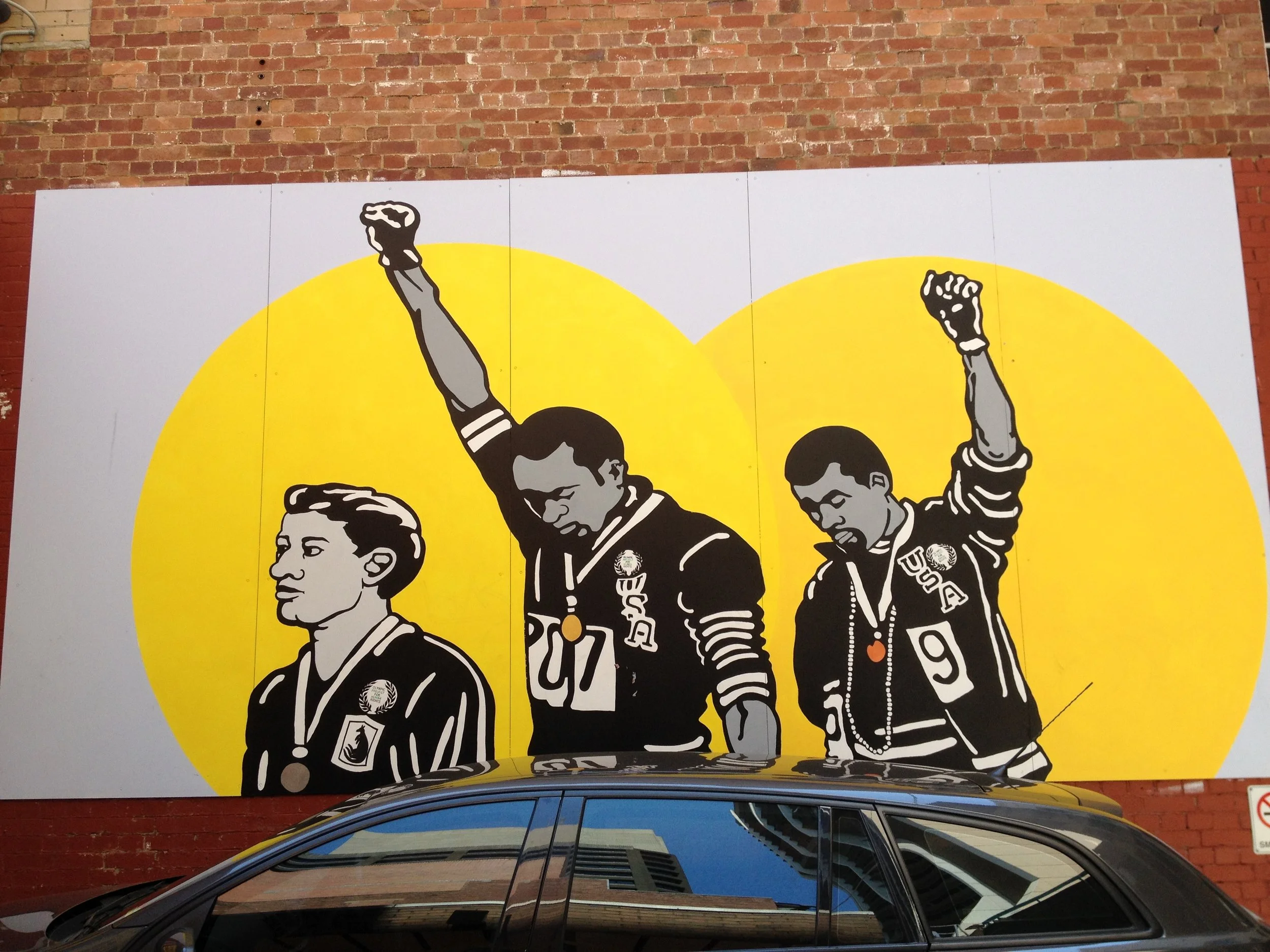
Richard Bell and Emory Douglas, ‘White Hero for Black Australia’ mural, Burnett Lane, Brisbane, 2013. Reproduced under Creative Common Attribution via Wikimedia Commons.
Bodies can, through this dissonance, through feeling differently and doing differently, contest established meanings. In this way bodies resist and transgress prevailing power relations and order.
This form of ritual resistance does not bring about swift and decisive political change. Affective agency works gradually and inaudibly and generates change over extended periods of time. Public acts of ritual resistance – such as those by Smith and Carlos – are only part of the story. Just as important, if not more, are the less visible ripple-effects they generate: the countless other more private and less spectacular acts of resistance that take place in everyday life. It is these everyday acts, rather than the big events, that form the base of social and political change.
Unsettling affects: Emotional Discomfort as a Catalyst for Political Change
The main point we want to advance in our article – and this short blog – is that political change occurs from a situation of discomfort. Feminist researchers have for long reminded us that meaningful change emerges from discomfort, from disruption, from questioning the habits and routines that shape and confine our social worlds.
A gradual transformation of political orders can emanate from the subversive affects of emotions that do not fit with customary social norms of feeling, which keep rituals and the authority and power they support in place.
Again, let us look at an example: the rituals associated with motherhood. Consider the New Zealand Prime Minister, Jacinda Arden, who gave birth while in office. Her case illustrates how private rituals associated with mothering can, when performed publicly, assume a symbolic meaning creates a deep sense of discomfort and potential for social change. In September 2018, Arden was the first world leader to take her baby to a United Nations General Assembly meeting: a public space that is rife with deeply entrenched ritualised interactions among representatives of states. Media coverage of this clash of rituals ranged from celebrating Ardern’s disruptive intervention as important steps towards gender equality to lamenting that this very act of multitasking reproduced gender stereotypes and led to her subsequent resignation.
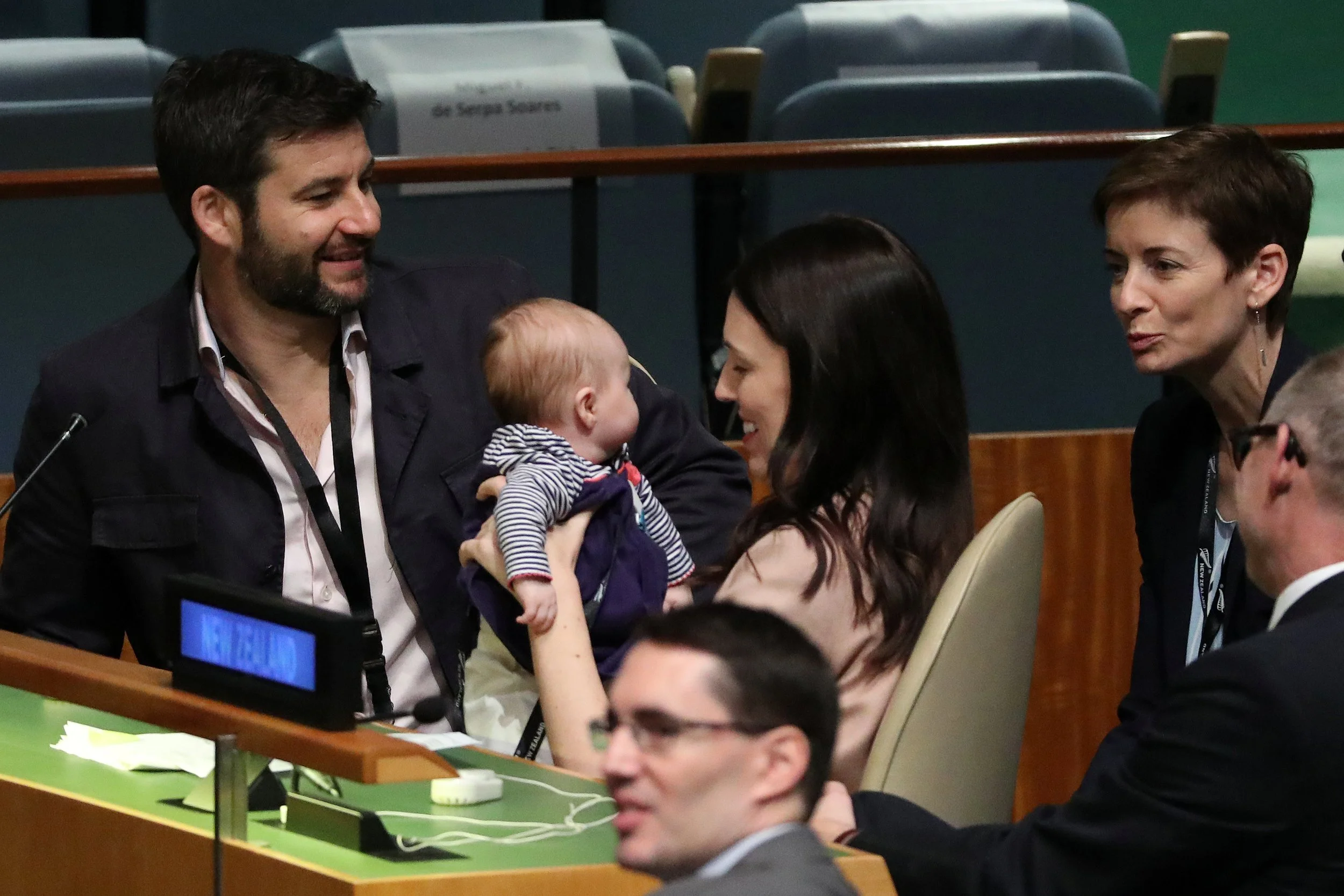
New Zealand Prime Minister Jacinda Ardern holds her baby Neve after speaking at the Nelson Mandela Peace Summit on 24 September 2018 during the 73rd United Nations General Assembly in New York City. Reproduced with permission from Reuters.
Even more emotional disruption occurred on occasions when women politicians publicly breastfed their babies, as did Senator Larissa Waters in the Australian Federal Parliament in May 2017. The related public discomfort and anxiety about breastfeeding is much discussed and an ongoing global phenomenon. As recently as 2023, several women who were breastfeeding in Australian public institutions, including courts, were asked to leave for fear of causing emotional distraction from the proceedings.
These brief examples illustrate how being uncomfortable – being unsettled – can be an important part of generating change. This appreciation of ritual disruption – of feeling and knowing differently – is key to the ensuing potential for political transformation. The discomfort created by these disruptions of gendered political structures and practices might not immediately bring more equality to public institutions. But they are part of a slow transformation of values that has been going on for centuries and constantly shifts private and public assumptions about gendered identities and role distributions.
The Normative Role of Rituals in Political Transformation
To be clear, and to summarise, at stake here is that performing a ritual differently – a disruption of the set ritual ‘script’ – may be inspired by feeling differently. Vice-versa, alternations in the performance of a ritual may cultivate new and different feelings in an individual or group. This looping effect is of political significance because feeling differently means knowing differently. It means conceiving of the social world anew.
A focus on the relationship between rituals, emotions and political change brings into sharp relief normative dimensions. Political orders – and so also the norms and rules that underpin orders – exist for a reason. Orders not only create stability in a world of ambiguity and difference, but also enact specific values and specific forms of political communities. Normative awareness of the agency involved in the links between rituals, emotions, and change thus comes with both the opportunity – and the responsibility – to decide what types of orders we prefer and would like to see established.
Appreciating the power of ritual disruption allows us – as scholars, as individuals, as members of different communities – to identify opportunities to promote change at moments when orders are not doing what they are meant to. This is the case, for instance, when we believe that an order’s underpinning rules, customs, and norms exclude and harm and may need to change. Emotions and their affective dimensions are a pivotal part of the puzzle of change: feelings and affects can signal and catalyse disruption. Emotions can imbue political relations – and the nature of an order – with new possibilities. International Relations scholars could, then, do more than what they usually do: look backwards to retrospectively analyse the complex dynamics through which political orders have emerged and evolved. Instead, they could also advise decision-makers about the possibilities that open-up once we embrace the power and potentials of ritual and emotion and imagine a different future through them.
Selection of Further Readings
A complete bibliography, including all sources mentioned in and used to research this text, is available in our published article in International Theory.
Aalberts, Tanja, Xymena Kurowska, Anna Leander, Maria Mälksoo, Charlotte Heath-Kelly, Luisa Lobato, and Ted Svensson. 2020. “Rituals of World Politics: On (Visual) Practices of Disordering Things.” Critical Studies on Security 8 (3): 240-64.
Baele, Stephane and Thierry Balzacq. 2022. “International Rituals: An Analytical Framework and its Theoretical Repertoires.” Review of International Studies 48 (1): 1-23.
Bell, Catherine M. 1992/2009. Ritual Theory, Ritual Practice. Oxford: Oxford University Press.
Bissell, David. 2013. “Habit Displaced: The Disruption of Skilful Performance.” Geographical Research 51 (2): 120-9.
Chadwick, Rachelle. 2021. “On the Politics of Discomfort.” Feminist Theory 22 (4): 556-74.
Collins, Randall. 2004. Interaction Ritual Chains. Princeton: Princeton University Press.
Driver, Tom F. 1998. Liberating Rites: Understanding the Transformative Power of Ritual. Boulder CO: Westview Press.
Durkheim Emile. 1995/1915. The Elementary Forms of Religious Life, tr Karen E Fields. New York: The Free Press.
Goffman, Erving. 1967. Interaction Ritual: Essays in Face-to-Face Behavior. New Brunswick: Transaction Publishers.
Hacking, Ian. 1995. “The Looping Effects of Human Kinds.” In Causal Cognition: A Multidisciplinary Debate, edited by Dan Sperber, David Premack, and James Premack, 351–94. Oxford: Clarendon.
Hemmings, Clare. 2012. “Affective Solidarity: Feminist Reflexivity and Political Transformation.” Feminist Theory 13 (2): 147-61.
Kertzer, David I. 1988. Ritual, Politics and Power. New Haven CT: Yale University Press.
Kustermans, Jorg and Ted Svensson. 2022. “The Return of Ritual in International Relations.” Cambridge Review of International Affairs 35 (1): 2-8.
Labanyi, Jo. 2010. “Doing Things: Emotion, Affect, and Materiality.” Journal of Spanish Cultural Studies 11 (3-4): 223-233.
Martín-Moruno, Dolores and Beatriz Pichel (eds). 2019. Emotional Bodies: The Historical Performativity of Emotions/ Illinois: Illinois University Press.
Mälksoo, Maria. 2021. “A Ritual Approach to Deterrence: I Am, Therefore I Deter.” European Journal of International Relations 27 (1): 53-78.
McClymond, Kathryn. 2016. Ritual Gone Wrong: What We Learn From Ritual Disruption. Oxford: Oxford University Press..
Ngai, Sianne. 2005. Ugly Feelings. Boston: Harvard University Press.
Pedwell, Carolyn. 2021. “Affective Habits: Sensation, Duration and Automation.” In Politics of Emotions: Power of Affects, edited by Susanne Witzgall and Marietta Kesting, 169-81. Berlin: Diaphanes.
Rai, Shirin M. 2025. “The Politics of Lament.” Political Studies. Online First. 1-18.
Solomon, Ty. 2023. “Up in the Air: Ritualized Atmospheres and the Global Black Lives Matter Movement.” European Journal of International Relations 29 (3): 576-601.
Wegner, Nicole. 2021. “Ritual, Rhythms, and the Discomforting Endurance of Militarism: Affective Methodologies and Ethico-Political Challenges.” Global Studies Quarterly 1 (3): 1-10.
Emma Hutchison was Associate Professor of International Relations at the University of Queensland at the time of her passing in November 2024.
Roland Bleiker is Professor of International Relations at the University of Queensland.